Buying gold jewelry is exciting, but choosing the right karat can be confusing. When comparing 10K gold vs 14K gold, you may wonder whether the more expensive option is worth the extra money. Both are real gold. Both can make beautiful rings, necklaces, bracelets, and earrings. However, they differ in gold purity, hardness, color, and value. Understanding these differences can help you avoid spending more than you need to.
The biggest difference is gold content. 10K gold contains 41.7% pure gold, while 14K gold contains approximately 58.3% pure gold. The remaining portion consists of other metals that affect the jewelry’s properties. In general, 10K gold is more affordable and harder, while 14K gold offers more gold content and often a warmer yellow color. Neither is automatically the best choice for everyone. Your budget, personal taste, and intended use will help you decide which one suits you best.
Quick Answer: 10K Gold vs 14K Gold
10K gold is generally better for shoppers who want genuine gold jewelry at a lower price. 14K gold is better for those who prefer higher gold purity and greater gold value by weight. Both can work well for everyday jewelry. Compare the specific piece, its construction, and its price before making your decision.
Why Do People Compare 10K Gold and 14K Gold?
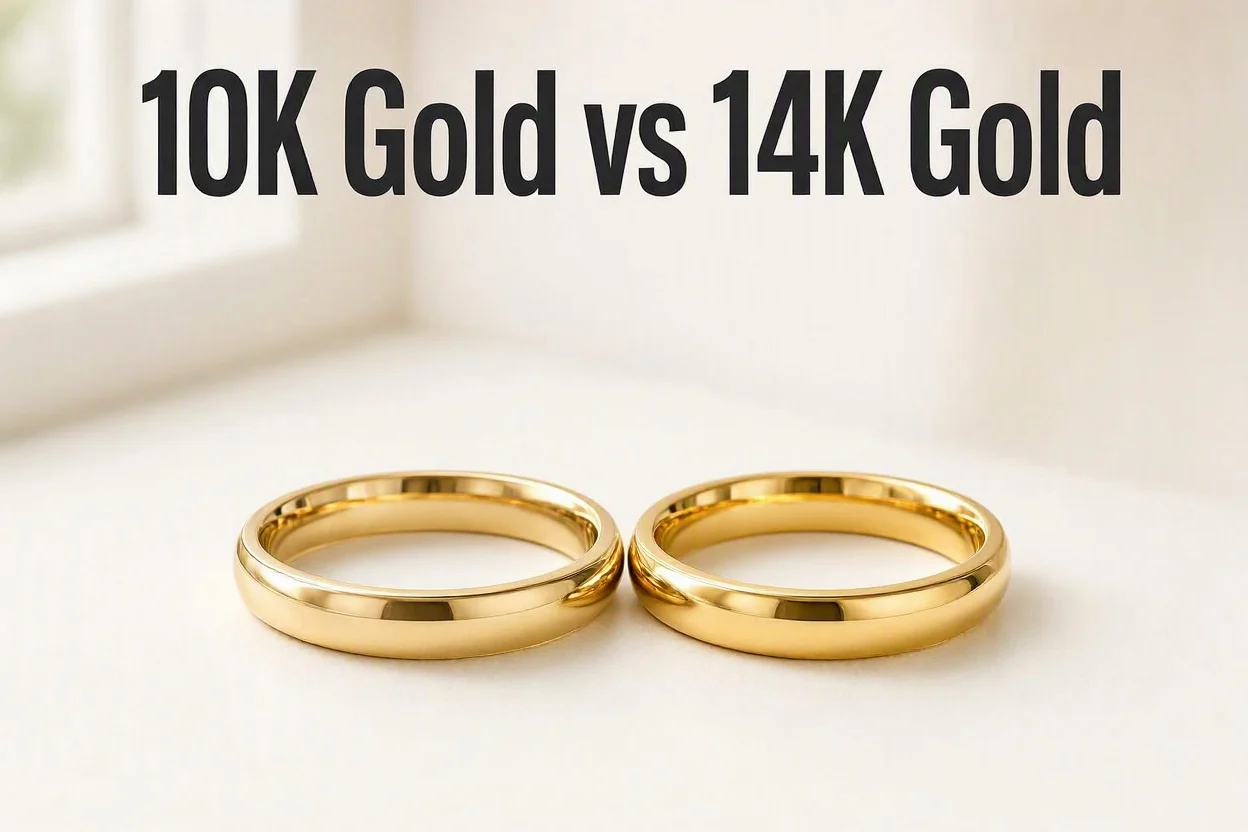
The two types can look similar, especially when viewed in a jewelry display. Their prices, however, may differ noticeably. That makes it important to understand what you are paying for.
Here are the main reasons people compare them:
- Gold purity: 14K gold contains more pure gold than 10K gold.
- Durability: 10K gold is generally harder, although the exact properties depend on the alloy.
- Appearance: Yellow 14K gold often looks warmer than comparable yellow 10K gold.
- Cost: 10K gold usually costs less when comparing similar pieces.
- Long-term value: 14K gold generally has more intrinsic gold value at the same weight.
- Everyday use: Both can be suitable for regular wear when properly designed and maintained.
The key is to look beyond the karat number. A well-made 10K gold ring may suit your needs better than a poorly made 14K gold ring.
10K Gold Explained
10K gold is a gold alloy made from 10 parts gold and 14 parts other metals out of 24 total parts. It contains less pure gold than 14K gold but is still genuine gold throughout the alloy.
What Is the Gold Purity of 10K Gold?
10K gold contains approximately 41.7% pure gold and 58.3% other metals.
For example, consider a solid 10-gram piece made entirely from 10K gold alloy:
- Pure gold: approximately 4.17 grams.
- Other metals: approximately 5.83 grams.
- Common purity marking: 417.
The 417 marking represents approximately 417 parts gold per 1,000 parts of the alloy.
Is 10K Gold Strong and Durable?
10K gold is generally harder than 14K gold because it contains a greater proportion of alloy metals. This can make it useful for jewelry that experiences frequent contact with everyday objects.
However, hardness is not the only measure of durability. A thin ring, delicate chain, or weak clasp can still break or bend. The jewelry’s design and workmanship also matter.
What Does 10K Gold Look Like?
Yellow 10K gold often has a lighter or less saturated golden color than comparable yellow 14K gold.
The exact appearance depends on the alloy. Copper, silver, zinc, and other metals can influence the final shade. White gold and rose gold are also available in 10K purity.
What Are the Pros and Cons of 10K Gold?
Pros
- Usually has a lower purchase price.
- Generally harder than comparable 14K gold.
- Contains genuine gold throughout the alloy.
- Available in many jewelry styles and colors.
Cons
- Contains less pure gold.
- Usually has lower intrinsic gold value at the same weight.
- May have a paler yellow color.
- Can contain metals that cause skin irritation in sensitive individuals.
Who Should Consider 10K Gold?
Consider 10K gold if your budget is limited, you prefer a harder gold alloy, or you want attractive gold jewelry without paying for a higher gold content.
It can be a practical option for rings, chains, earrings, and other pieces. Always compare the construction and quality of the specific item before buying.
14K Gold Explained
14K gold contains 14 parts gold and 10 parts other metals out of 24 total parts. It offers a higher gold content than 10K gold while retaining the strength needed for many everyday jewelry designs.
What Is the Gold Purity of 14K Gold?
14K gold contains approximately 58.3% pure gold and 41.7% other metals.
For a solid 10-gram piece made entirely from 14K gold alloy:
- Pure gold: approximately 5.83 grams.
- Other metals: approximately 4.17 grams.
- Common purity marking: 585.
The 585 marking indicates 585 parts gold per 1,000 parts of the alloy, or 58.5%. This is a commonly used fineness marking for 14K gold.
Is 14K Gold Durable Enough for Everyday Wear?
Yes. 14K gold is generally suitable for everyday jewelry when the piece is well made.
It is usually less hard than 10K gold, but it is not necessarily fragile. Its balance of gold content and alloy metals makes it suitable for many rings, bracelets, necklaces, and earrings.
If you are buying a ring for daily wear, consider the thickness, setting, and design alongside the karat.
What Does 14K Gold Look Like?
Yellow 14K gold often has a warmer, richer golden appearance than comparable yellow 10K gold.
However, not every 14K gold item will look noticeably more yellow. Alloy composition, surface finish, and lighting all affect its appearance.
White 14K gold may have a rhodium coating that creates a bright white finish. Rose gold gets its pinkish tone largely from copper in the alloy.
What Are the Pros and Cons of 14K Gold?
Pros
- Contains more pure gold than 10K gold.
- Generally has greater intrinsic gold value at the same weight.
- Often offers a warmer yellow color.
- Suitable for many everyday jewelry designs.
- Provides a balance of gold purity and practical durability.
Cons
- Usually costs more than comparable 10K gold jewelry.
- Is generally less hard than 10K gold.
- Can still scratch, bend, or break.
- May cause skin irritation depending on its alloy composition.
Who Should Consider 14K Gold?
14K gold is worth considering if you want more pure gold in your jewelry and can afford the higher purchase price.
It is a popular option for engagement rings, wedding bands, and other pieces intended for frequent wear. It may also appeal to buyers who value gold content and plan to keep their jewelry for many years.
10K Gold vs 14K Gold: Comparison Table
| Feature | 10K Gold | 14K Gold |
| Pure gold content | 41.7% | 58.3% |
| Other metals | 58.3% | 41.7% |
| Common purity stamp | 417 | 585 |
| Relative hardness | Generally harder | Generally softer |
| Yellow gold color | Often paler | Often warmer |
| Typical purchase cost | Lower | Higher |
| Gold value by equal weight | Lower | Higher |
| Everyday wear | Suitable for many designs | Suitable for many designs |
| Best suited for | Budget-conscious buyers | Buyers seeking more gold content |
These are general comparisons. Actual performance, appearance, and price depend on the alloy, construction, weight, and seller.
Which One Should You Choose?
The best choice depends on your priorities.
Choose 10K Gold If…
- You want to spend less on genuine gold jewelry.
- You prefer a generally harder gold alloy.
- You are comfortable with a lower gold content.
- You have found a well-made piece that fits your budget.
- You want to compare affordable options for everyday use.
Choose 14K Gold If…
- You want a higher percentage of pure gold.
- You prefer the appearance of a warmer yellow gold alloy.
- You want greater intrinsic gold value for the same weight.
- You are shopping for an engagement ring or wedding band.
- You are comfortable paying more for additional gold content.
My practical recommendation: If you can comfortably afford either option, 14K gold is a strong all-around choice when higher gold content matters to you. If keeping costs down is your main concern, 10K gold can be an excellent alternative.
How to Tell 10K Gold and 14K Gold Apart
You cannot reliably identify gold purity by appearance alone. Use these checks when comparing jewelry.
1. Check the Purity Stamp
Look for markings such as 417 or 585, or karat markings such as 10K and 14K.
A stamp is a useful starting point, but it is not absolute proof of authenticity. Counterfeit or incorrectly marked jewelry can exist.
2. Ask for Documentation
A reputable seller may provide an invoice, product description, or other documentation stating the karat, weight, and whether the item is solid gold, plated, or filled.
Make sure the description matches what you are purchasing.
3. Compare the Weight and Price
For equal weights, 14K gold contains more pure gold than 10K gold. However, weight alone does not prove purity, and the heaviest item is not automatically the best value.
Compare the gold content, craftsmanship, and total price.
4. Get the Jewelry Tested
If you are buying an expensive piece or are uncertain about its authenticity, ask a qualified jeweler or professional testing service to verify its purity.
Do not rely solely on color, a magnet, or an online visual guide to determine the karat.
How Much More Gold Does 14K Contain?
The difference becomes clearer when you compare the same weight.
For a 10-gram piece made entirely from each alloy:
| Calculation | 10K Gold | 14K Gold |
| Total alloy weight | 10 g | 10 g |
| Pure gold | 4.17 g | 5.83 g |
| Other metals | 5.83 g | 4.17 g |
14K gold contains approximately 1.66 grams more pure gold in this example.
This does not mean every 14K jewelry item contains more gold than every 10K item. A heavier 10K piece can contain more total gold than a much lighter 14K piece.
Quick Calculation Example
To estimate the pure gold content of a piece, multiply its alloy weight by its gold percentage.
For a 10-gram piece of 14K gold:
10 × 0.583 = approximately 5.83 grams of pure gold.
For a 10-gram piece of 10K gold:
10 × 0.417 = approximately 4.17 grams of pure gold.
These calculations assume the stated purity is accurate and the item consists entirely of the specified gold alloy, excluding stones or other materials.
What Affects the Price of 10K and 14K Gold?
Gold purity is an important factor, but it does not determine the full retail price.
Consider these factors before purchasing:
- Gold weight: Heavier pieces generally contain more gold when purity is equal.
- Gold purity: 14K contains more gold per gram of alloy than 10K.
- Craftsmanship: Detailed designs and skilled work can increase the price.
- Gemstones: Diamonds and other stones can contribute significantly to the total cost.
- Brand and retailer: Different sellers may charge different markups.
- Market conditions: Gold prices change over time, affecting material costs.
- Resale terms: Buyers may use different testing methods, deductions, and pricing policies.
If you are shopping in Pakistan, compare the stated karat, net gold weight, making charges, and final bill across reputable jewelers. Ask whether stones or other materials are included in the stated weight. Check current local gold rates before making a purchase, because rates change frequently.
Common Mistakes and Myths About 10K and 14K Gold
Myth 1: 10K Gold Is Fake Gold
False. 10K gold is genuine gold alloy containing approximately 41.7% pure gold. It is not the same as gold-plated jewelry.
Myth 2: 14K Gold Is Always More Durable
Not necessarily. 14K gold contains more pure gold, but 10K gold is generally harder. The durability of a finished item also depends on its design, construction, and alloy.
Myth 3: The More Expensive Ring Is Always Better
A higher price does not automatically mean better craftsmanship or a better fit for your needs. Compare construction, comfort, purity, and value before choosing.
Myth 4: You Can Identify Karat by Color Alone
False. Alloy composition and surface finish affect the color. Visual inspection cannot reliably establish gold purity.
Myth 5: 14K Gold Always Resells for More Than 10K Gold
14K gold generally has greater intrinsic gold value per gram, but the actual resale offer depends on weight, verified purity, market prices, and the buyer’s terms.
Myth 6: Higher Gold Purity Means No Skin Irritation
Not necessarily. Skin sensitivity depends partly on the alloy metals. Neither 10K nor 14K gold is automatically suitable for everyone with sensitive skin.
Similar or Related Comparisons
- 10K Gold vs 18K Gold: Compare affordability, gold purity, color, and relative softness.
- 14K Gold vs 18K Gold: Learn how higher gold content affects appearance, price, and everyday wear.
- 14K Gold vs 24K Gold: Understand the difference between jewelry alloys and nearly pure gold.
- Solid Gold vs Gold-Plated Jewelry: Learn how the construction affects durability, gold content, and long-term value.
- Yellow Gold vs White Gold: Compare two popular gold colors and their alloy compositions.
Final Verdict: Which Gold Is Better?
The choice between 10K gold and 14K gold comes down to what you value most. 10K gold is generally more affordable and harder. 14K gold contains more pure gold, often has a warmer yellow appearance, and offers greater intrinsic gold value at the same weight.
Neither option is automatically superior. A well-made 10K piece can be a better purchase for someone who wants affordable jewelry, while 14K gold may be more appealing to someone who values higher gold content.
Frequently Asked Questions
Is 10K gold better than 14K gold?
Neither is better in every situation. 10K gold is generally more affordable and harder, while 14K gold contains more pure gold and has greater intrinsic gold value at equal weight.
Is 14K gold worth the extra money?
It can be worth the extra cost if you value higher gold purity and greater gold content. Whether it is worth it depends on your budget, the item’s construction, and the price difference.
Does 10K gold tarnish?
10K gold can develop surface discoloration or tarnish because its alloy contains other metals. The extent depends on the alloy and exposure to moisture, chemicals, and other environmental factors.
Can you shower with 10K or 14K gold?
Solid 10K and 14K gold can generally tolerate brief contact with water, but frequent exposure to soaps, shampoos, chlorine, and cleaning products can affect the jewelry’s finish or other components. Follow the care instructions for your piece.
Which gold is better for sensitive skin?
Neither karat is automatically better. The specific alloy composition matters, particularly if it contains nickel or another metal that irritates your skin. Ask the jeweler about the alloy before buying.
Does 14K gold contain more gold per gram?
Yes. A gram of 14K gold contains approximately 0.583 grams of pure gold, while a gram of 10K gold contains approximately 0.417 grams, assuming the stated purities are accurate.
Can 10K gold be used for engagement rings?
Yes. 10K gold can be used for engagement rings and may appeal to buyers seeking a lower price and a relatively hard alloy. Consider the setting, craftsmanship, and intended use before choosing.
Which is better for long-term value?
14K gold generally has greater intrinsic gold value per gram because it contains more pure gold. However, resale value depends on verified purity, weight, market rates, condition, and the buyer’s policies.
Remember This
- 10K gold: Approximately 41.7% pure gold; usually more affordable and harder.
- 14K gold: Approximately 58.3% pure gold; generally higher intrinsic gold value per gram.
- Durability: Both can work well for everyday jewelry when properly designed.
- Authenticity: Check purity markings and use professional testing when necessary.
- Value: Compare gold weight, craftsmanship, making charges, and current prices.
Conclusion
When choosing between 10K gold and 14K gold, start with your budget and the type of jewelry you want. If you want genuine gold at a lower upfront cost, 10K gold may be the right choice. If you prefer more pure gold and are willing to pay more, 14K gold is worth considering. Both can provide attractive, lasting jewelry when made well and cared for properly.
Before buying, check the purity stamp, verify the gold weight, compare the final price, and ask about the alloy and return policy. These simple steps can help you choose confidently and find a piece that fits your style, budget, and expectations.